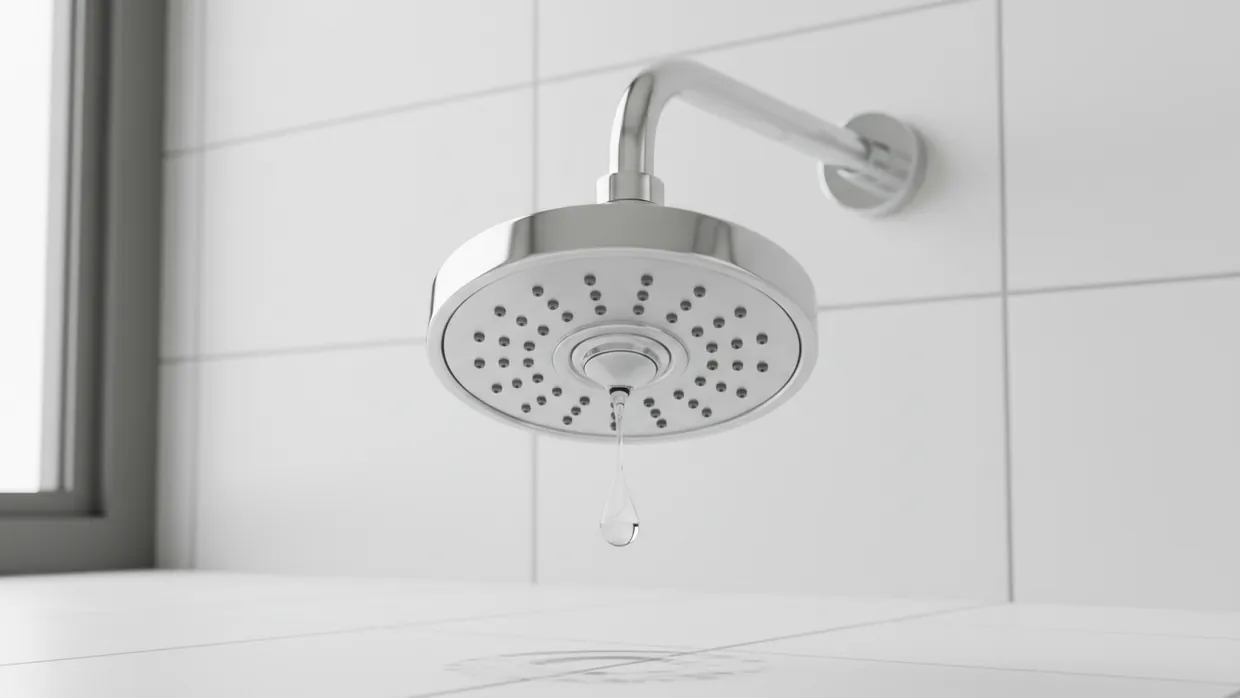
Why a shower head drips
The shower head has no valve in it. It is the end of an open pipe, and the taps are what hold the water back. So when the head keeps dripping, the water is getting past a tap. After a shower, the water left in the arm and the head runs out over a minute or so, and big rain-style heads hold enough to drip for several minutes. That is not a leak.
Fixing a drip from the taps
In a shower with separate hot and cold taps, each tap closes a rubber washer onto a brass seat. The washer hardens and wears, and the tap has to be turned harder and harder to stop the drip. New washers fix it, and replacing a tap washer is one of the jobs a homeowner may do in Queensland. If new washers do not hold, the seat is pitted and needs reseating, which a plumber does with a cutting tool.
A single-lever mixer has a ceramic cartridge instead. When it wears, the mixer drips or will not hold its temperature. Replacing a cartridge means matching the exact part and is a job for a licensed plumber.
How to change a shower head
- Turn the shower taps off. The water does not need to be turned off at the meter.
- Wrap a cloth around the nut behind the head and undo it anticlockwise with a spanner, holding the arm still with your other hand.
- Clean the old tape and scale off the thread on the arm.
- Wrap plumber’s thread tape clockwise around the thread, five or six turns.
- Screw the new head on by hand, then nip it up a quarter turn with the spanner over a cloth.
- Run the shower and check the joint. A weep means one more turn or more tape.
Choosing a new head
New shower heads sold in Australia carry a WELS water rating. A three-star head uses no more than 9 litres a minute, about half of an old-style head, and that saving shows up on both the water bill and the hot water bill. If the new head feels weak, the house may have low pressure, or the head may suit higher pressure than you have: check the pressure range on the box.
Why not to ignore it
A steady drip can waste more than 10,000 litres a year, and if it is the hot tap you are paying to heat that water as well. Taps that have to be forced shut also wear their seats, which turns a washer job into a reseating or a new tap.
Typical cost: Fixing a leaking or dripping shower tap is typically $80–$260. Replacing a mixer is typically $200–$500. See the price guide.