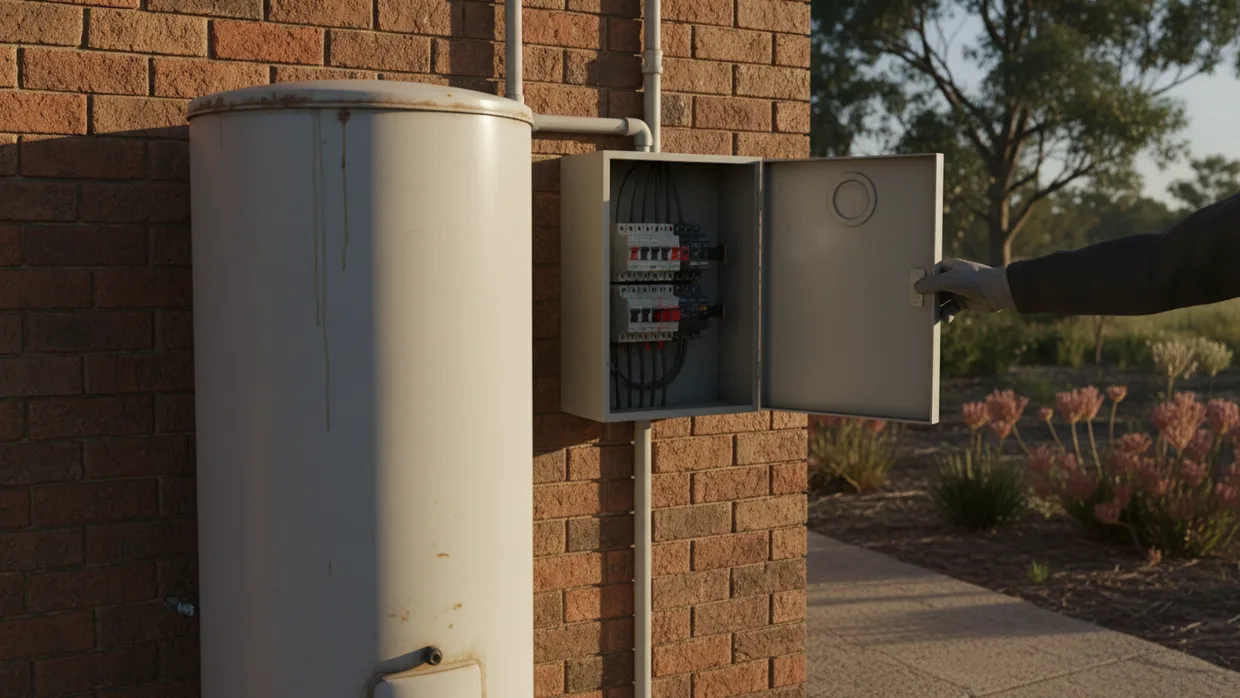
How it works
Cold water enters at the bottom of the tank. An electric element, much like the one in a kettle, heats it, and a thermostat switches the element off at the set temperature. Hot water rises, so it is drawn off from the top. As you use it, cold water flows in underneath and the element starts again.
The tank is kept at 60°C or more to stop Legionella bacteria growing. A tempering valve on the outlet then mixes in cold water so that bathrooms get no more than 50°C.
What size do you need?
It depends on the tariff as much as on the household. On an off-peak tariff the tank heats mostly overnight, so it has to hold a whole day of hot water: about 125 to 160 litres for one or two people, 250 litres for three or four, and 315 to 400 litres for a bigger household.
On a continuous tariff the tank can reheat during the day, so a smaller one does the job, but each litre costs more to heat. The hot water sizing tool works it out for your household.
How long they last
Most electric storage tanks last 8 to 12 years. What ends them is rust. The steel tank has a glass lining and a sacrificial anode: a metal rod that corrodes so the tank does not. Once the anode is used up, usually after five years or so, the tank itself starts to rust. Replacing the anode at about five years is the cheapest way to make a tank last.
Hard water shortens the life of the element and the tank. Signs the end is near: rusty or discoloured hot water, water weeping from the tank body, rumbling as it heats, and hot water that runs out sooner than it used to.
Running costs and tariffs
In South East Queensland, Tariff 33 gives power to the hot water system for at least 18 hours a day at a reduced rate, and Tariff 31 gives it for at least 8 hours, mostly overnight, at a lower rate again. A tank on the general tariff heats whenever it wants, at full price.
Homes with solar panels often do better with a timer that heats the tank in the middle of the day. A heat pump uses roughly a third of the electricity of a standard element for the same hot water, which is why it costs more to buy and less to run.
What goes wrong
- No hot water at all: a failed element or thermostat, or a tripped circuit breaker.
- Hot water runs out quickly: one element of a twin-element tank has failed, or the tank is too small for the household.
- Relief valve dripping all the time: a small drip while the tank heats is normal, but a steady flow means the valve needs replacing.
- Water too hot or only lukewarm at the taps: the thermostat or the tempering valve.
- Water leaking from the tank body: the tank has rusted through and needs replacing.
Who can work on it
Installing or replacing a hot water system is licensed plumbing work, and the electrical connection is licensed electrical work. In Queensland a replacement is also notifiable work, which the plumber lodges with the regulator. The things a homeowner can do are the checks in the steps above.
Typical cost: An electric storage system, supplied and installed, is typically $1,000–$2,500. Replacing an element or thermostat is typically $200–$450. See the price guide.