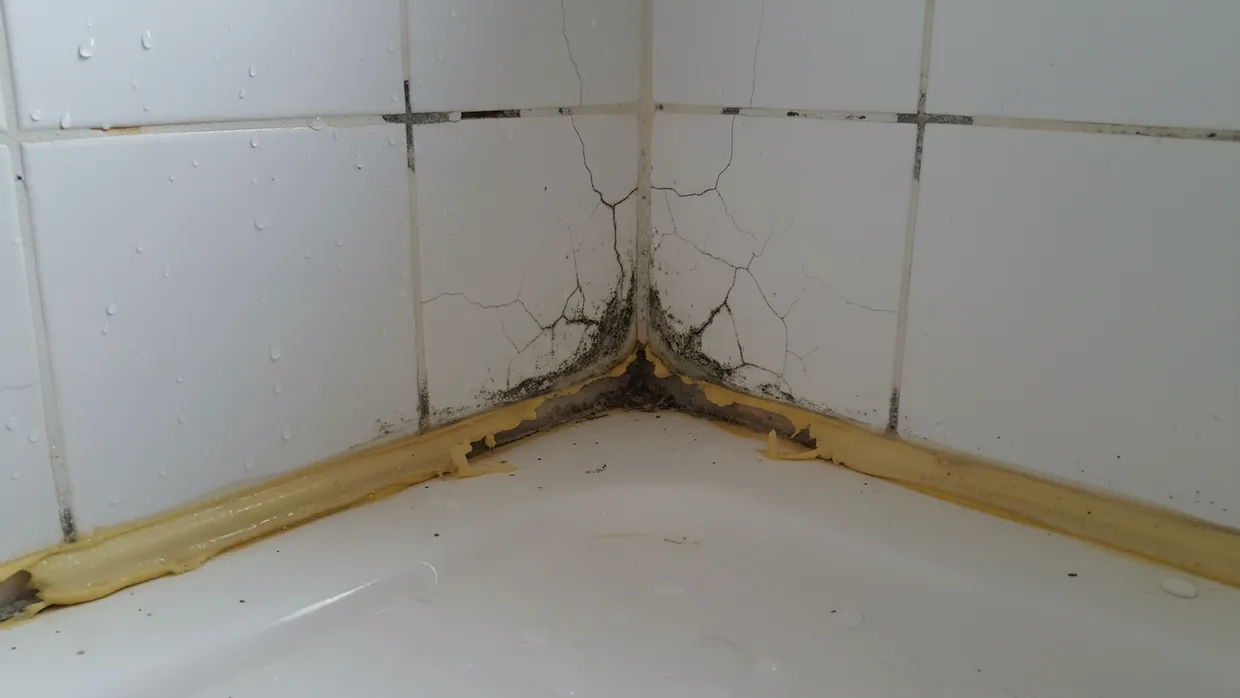
Water escaping from a shower comes from one of three places: the pipes and taps inside the wall, the waste under the shower base, or failed grout, silicone and waterproofing. Three tests tell them apart: stop using the shower, flood the base, then wet the walls. Which test brings the damp back tells you who to call.
Cracked grout and peeling silicone let water through to whatever waterproofing is left behind the tiles.
OVER A FEW DAYS
Find it with four tests.
Stop using it
Leave the shower dry for a few days. If the damp patch keeps growing, a pipe under pressure is leaking: do the water meter test.
Flood the base
Plug the waste and fill the base 20 to 30 mm deep with a bucket, without wetting the walls. Mark the level. If it drops or the damp returns, it is the base or the waste.
Wet the walls
With the base test passed, run the shower aimed at the walls and around the taps for ten minutes. Damp now points to the wall tiles or the tap penetrations.
Check the screen
Look for water tracking under the screen or door. A failed screen seal is the cheapest fix of all.
The signs
A damp or stained wall on the other side of the shower.
Swollen skirting boards, door frames or carpet edge outside the bathroom.
A stain on the ceiling below an upstairs shower.
Loose, drummy or lifting tiles, and mould that returns in the same grout line.
Who fixes what
Pipes, taps, the mixer body in the wall and the shower waste are a plumber’s work. A plumber can pressure test the pipes to confirm or rule them out.
Failed grout, silicone or the waterproofing membrane behind the tiles is work for a waterproofer, tiler or shower resealing service. In Queensland, waterproofing a wet area is licensed work. Regrouting and resealing can fix a shower whose membrane is still sound; if the membrane has failed, the tiles have to come up.
Why it is worth acting on early
A slow shower leak rots wall frames and floor sheeting and attracts termites, long before it looks serious. Insurers usually cover sudden leaks and often decline gradual seepage, so photos and dates of when you first noticed it help.
Renting
Tell the property manager in writing as soon as you see damp. It is the owner’s repair, and early notice protects your bond.
Typical cost: Hidden leak detection is typically $200–$500 in Ipswich. See the price guide.
Look for damp or stained walls next to the shower, swollen skirting or door frames, a ceiling stain below, loose tiles, or mould that keeps coming back in the same place.
Is a leaking shower a plumbing problem?+
Sometimes. Pipes, taps and the waste are plumbing. Failed grout, silicone and waterproofing are not: they need a waterproofer or shower resealer. The flood test and the wall test tell you which.
Can a leaking shower be fixed without removing tiles?+
If the waterproofing membrane is sound and the leak is through grout or silicone, regrouting and resealing can fix it. If the membrane has failed, the tiles have to come up.
Will insurance cover a leaking shower?+
It depends on the policy. Sudden leaks are often covered; gradual seepage through failed waterproofing often is not. Check your policy, and keep photos and dates.
How much does it cost to find a hidden leak in Ipswich?+
Leak detection is typically $200–$500. A visual inspection with a meter test is usually $150–$300.