What each one means
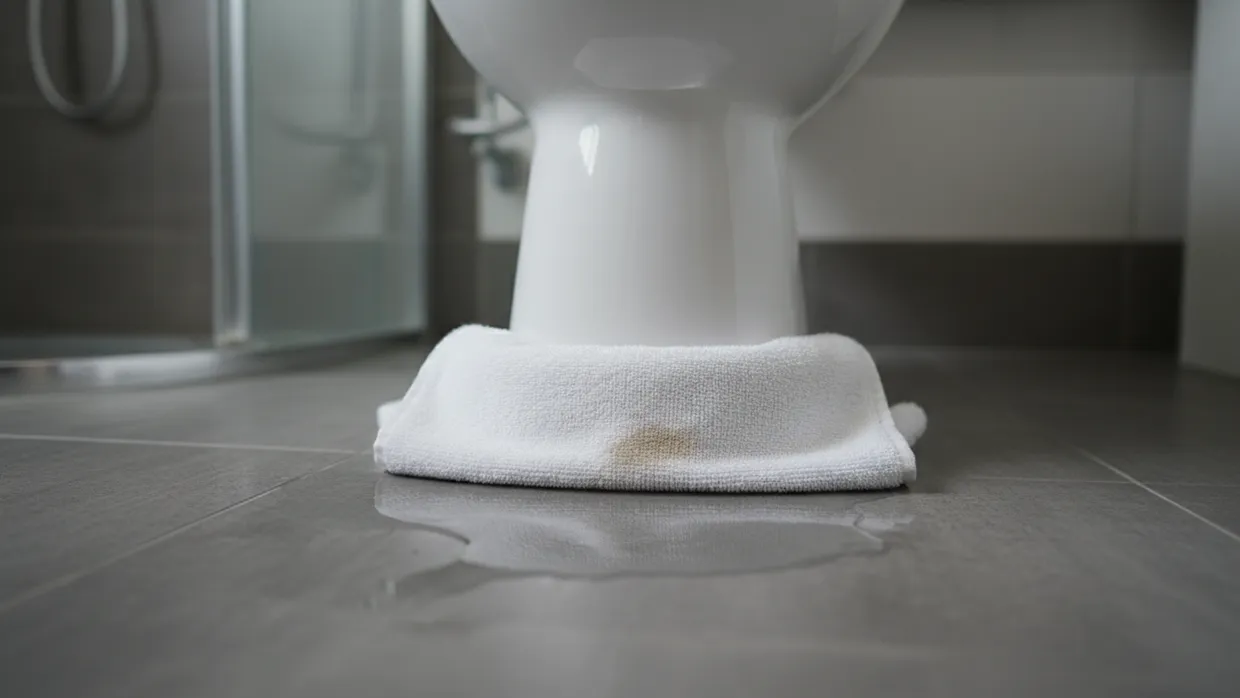
- The pan seal (pan collar): the rubber seal between the toilet and the waste pipe has perished or the pan has come loose. Water appears after a flush and may smell. This is waste water, so do not leave it.
- The cistern join: the seal or bolts between the cistern and the pan leak during a flush. Clean water runs down the back.
- The supply: a weeping stop tap or a braided hose that is failing. It drips whether or not you flush. Turn the stop tap off; a bulging or rusty hose can burst.
- Condensation: on humid Ipswich days, cold water in the cistern makes the outside sweat. It comes and goes with the weather.
- A cracked pan or cistern: a hairline crack weeps slowly. The fix is a new suite.
What a plumber does
For a pan seal the toilet comes off the floor, the seal is replaced and the pan is refixed and sealed. Cistern seals and supply hoses are quicker jobs. None of them are for bathroom silicone: sealing over a leaking pan seal hides the leak while the floor underneath rots.
If it is not the toilet
Water at the base can also travel from a leaking shower next to it, or from a pipe in the wall. If the tissue test finds nothing, look there.
Typical cost: Repairing a leaking toilet is typically $150–$350 in Ipswich. See the price guide.