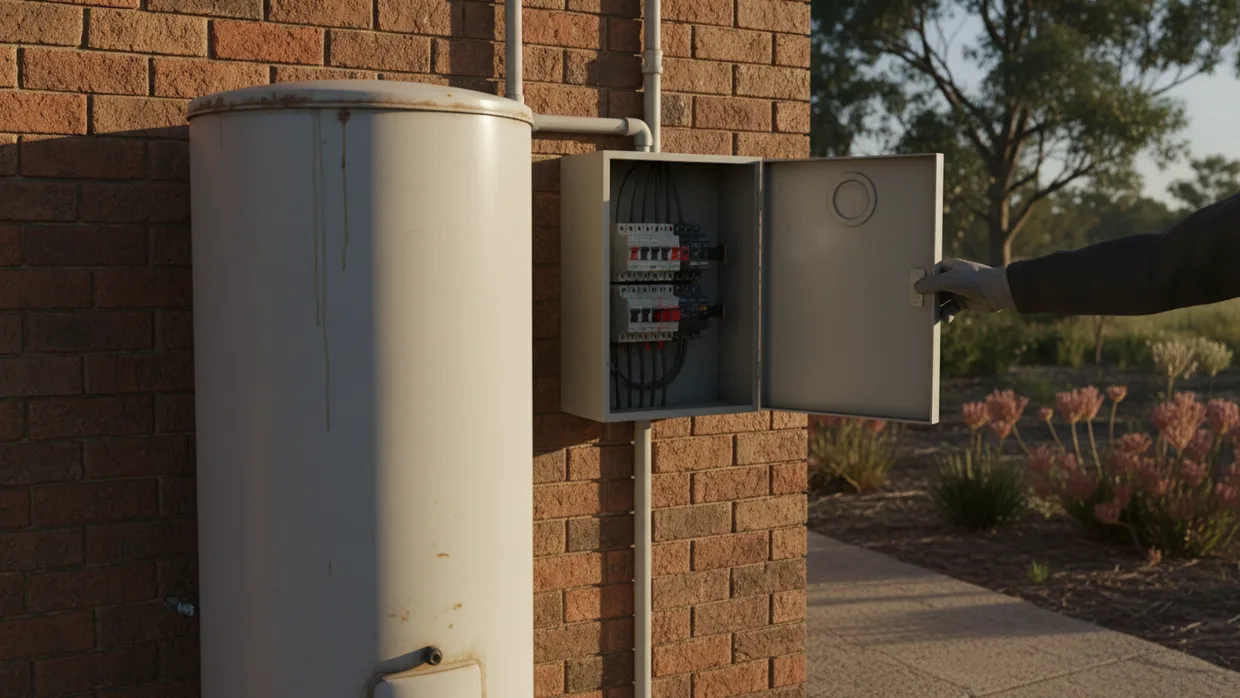
The tempering valve: why bathroom water stops at 50°C.
THE SHORT ANSWER
A tempering valve sits on the pipework at the hot water system and mixes cold water into the hot, so the water reaching bathroom taps is no hotter than 50°C. The tank itself has to stay at 60°C or more to stop bacteria growing. When the valve wears out, usually after five to ten years, the bathrooms run lukewarm, swing between hot and cold, or lose hot water pressure while the kitchen stays hot.
The tempering valve is on the pipes at the hot water system, usually with a coloured plastic cap.
TWO MINUTES
Is it the valve? Four checks.
Compare kitchen and bathroom
Kitchens and laundries are often not tempered. Hot there but lukewarm in the bathroom points at the valve.
Feel for swings
Shower temperature that drifts hot and cold on its own, with nobody else using water, is a sticking valve.
Check the pressure
Weak hot water with normal cold: a valve clogging with scale restricts the flow.
Find the valve
A brass T-shaped fitting on the pipes at the heater, with a plastic cap that is usually blue, green, orange or black.
Why it is there
Water at 60°C scalds a child in about a second; at 50°C it takes minutes. Stored hot water has to be kept at 60°C or more to control Legionella bacteria. The tempering valve lets both be true: hot in the tank, safe at the tap. It is required on new and replacement hot water systems for the taps used for washing.
Why they fail
Inside is a temperature-sensitive element that moves a piston. Scale from Ipswich’s moderately hard water builds up on it until it sticks. Most last five to ten years. A valve cannot be adjusted back to health once it sticks; it is replaced.
Replacing one
It is a licensed plumber’s job, and a short one: the valve is swapped at the heater and the temperature at a bathroom tap is checked with a thermometer. The cap colour matters, because valves are made for electric, gas, or solar and heat pump systems. If your hot water system is being replaced, the valve is normally replaced with it.
Tempering valve or thermostatic mixing valve?
They do the same job with different precision. A tempering valve is the simple, cheaper one fitted in houses: it holds the outlet near 50°C. A thermostatic mixing valve (TMV) reacts faster, holds the temperature more exactly and shuts off if the cold supply fails. TMVs are required in places such as hospitals, aged care and childcare, where the limit is 45°C, and they have to be tested every year by a plumber with the right endorsement.
Typical cost: Replacing a tempering valve is typically $200–$450 in Ipswich. See the price guide.
It mixes cold water into the hot from the tank so bathroom taps deliver no more than 50°C, which prevents scalding, while the tank stays at 60°C or more.
How do I know if my tempering valve is faulty?+
Bathroom water that is only lukewarm, a shower that swings between hot and cold, or weak hot water pressure, while the kitchen tap still runs properly hot.
How long does a tempering valve last?+
Usually five to ten years. Scale from hard water shortens that.
Can I adjust or replace a tempering valve myself?+
No. It is a safety device, and setting or replacing it is work for a licensed plumber, who checks the delivery temperature afterwards.
How much does it cost to replace a tempering valve in Ipswich?+