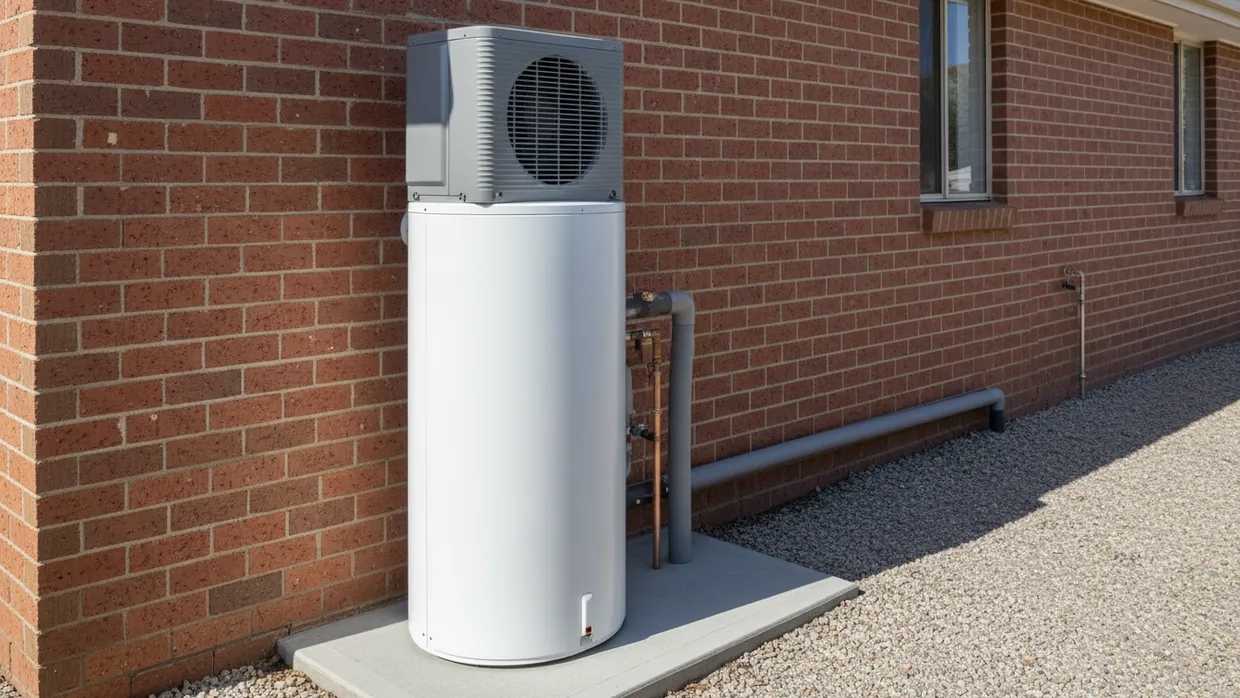
A heat pump hot water system pulls heat out of the surrounding air and moves it into the water, like a fridge running in reverse. It uses roughly a third of the electricity of a standard electric storage tank. It costs more up front, the upfront price is reduced by federal certificates applied by the installer, and it suits the warm Ipswich climate well. The trade-offs are a fan that makes some noise and the need for an outdoor spot with open air around it.
The fan unit on top pulls heat from the air. It needs open air around it, so not a cupboard.
BEFORE YOU QUOTE
Four things to work out.
Count the people
Size it like any storage tank: about 50 litres per person per day. Most households suit a tank between 170 and 315 litres.
Pick the spot
Outdoors, on a firm base, with clear air around the fan. Keep it away from bedroom windows, yours and the neighbours’.
Check the power
Most plug into a standard circuit. A timer set for the middle of the day lets rooftop solar do most of the heating.
Ask what is included
Removal of the old tank, a new tempering valve, the electrical work and the certificates discount should all be itemised.
How it compares
Standard electric tank: cheapest to buy, dearest to run.
Heat pump: dearer to buy, about a third of the running cost of an electric tank, and it can run on your solar in the day.
Gas: mid-range to buy; running cost depends on gas prices, and LPG bottles are dear to run.
Solar hot water: low running cost, but needs roof space and usually a booster.
Rebates and certificates
Heat pumps earn Small-scale Technology Certificates under the federal renewable energy scheme. The installer normally claims them and takes the value off the quote. State rebates come and go: check the Queensland Government website for anything current before you order, and be wary of offers that seem too cheap. Very low prices usually mean a small tank and a short warranty.
What goes wrong
Heat pumps have more parts than a plain tank: a compressor, a fan and a controller. Good brands carry five-year warranties or longer on those. They heat more slowly than a standard element, which is why sizing the tank properly matters, and they work harder on cold winter nights, though Ipswich winters are mild enough for them.
Typical cost: A heat pump is typically $3,600–$5,800 supplied and installed in Ipswich, before the certificates discount. See the price guide.
For most households with an electric tank now, yes: they use about a third of the power, so the extra purchase cost is usually recovered in a few years. With rooftop solar and a daytime timer the saving is larger.
How much does a heat pump hot water system cost in Ipswich?+
Typically $3,600–$5,800 supplied and installed before the certificates discount, compared with $1,000–$2,500 for a standard electric tank.
Are heat pump hot water systems noisy?+
About as loud as an air conditioner’s outdoor unit while running. Place it away from bedroom windows and run it on a daytime timer, and it is rarely a problem.
Do heat pumps work in winter in Queensland?+
Yes. They are less efficient on cold nights, but South East Queensland winters are mild. A daytime timer avoids the coldest hours.
Can a heat pump replace my electric hot water system directly?+
Usually, yes: the plumbing connections are similar. It needs an outdoor position with open air, a suitable power circuit, and a new tempering valve.