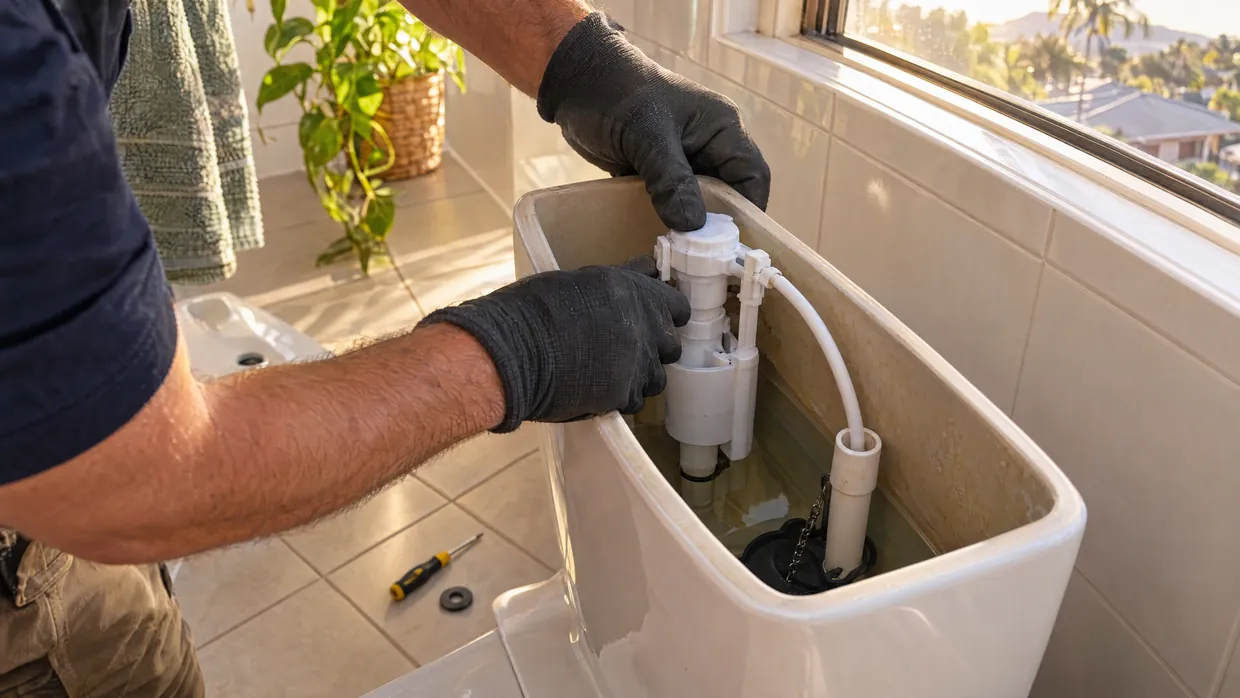
FLUSH VALVE SEAL
The flush valve seal is letting water through
Colour in the bowl means water is seeping past the seal at the bottom of the cistern. The inlet valve then tops the cistern up, which is the refill or trickle you hear. A new seal (or the whole flush valve on older cisterns) fixes it.
Typical cost: $150–$350 for a running toilet repair, usually one visit with the part.
INLET VALVE
The inlet valve isn’t shutting off
A clear bowl after the colouring test means the seal is fine. The water is rising past the overflow level instead, because the inlet valve that refills the cistern doesn’t close fully. It usually needs a new inlet valve; sometimes just adjusting the water level.
Typical cost: $150–$350 for a running toilet repair, including the valve.
STOP IT FIRST
The flush is stuck on: turn the stop tap off
A cistern that runs non-stop after a flush has a flush valve that didn’t close or an inlet valve that won’t shut. Turn the stop tap beside or under the cistern clockwise to stop the water now. If the button is stuck down, lifting it can free it; if not, it needs a plumber.
Typical cost: $150–$350 for a running toilet repair.
TRY THIS FIRST
Do the food colouring test
Put a few drops of food colouring in the cistern (lift the lid; on an in-wall cistern the button panel lifts off, or just watch the bowl for a ripple) and don’t flush for 20 minutes. Colour in the bowl means the flush valve seal is leaking; a clear bowl points to the inlet valve. Then answer the question again.
Typical cost: $150–$350 if it needs a plumber.
WEAK FLUSH
A weak flush: the water level or a partial blockage
A cistern set too low, a flush valve that opens only part way, or a partial blockage in the pan or drain all make a weak flush. If the bowl rises before it drains, treat it as a blockage.
Typical cost: $150–$350 for a cistern repair; $95–$180 to unblock a toilet.