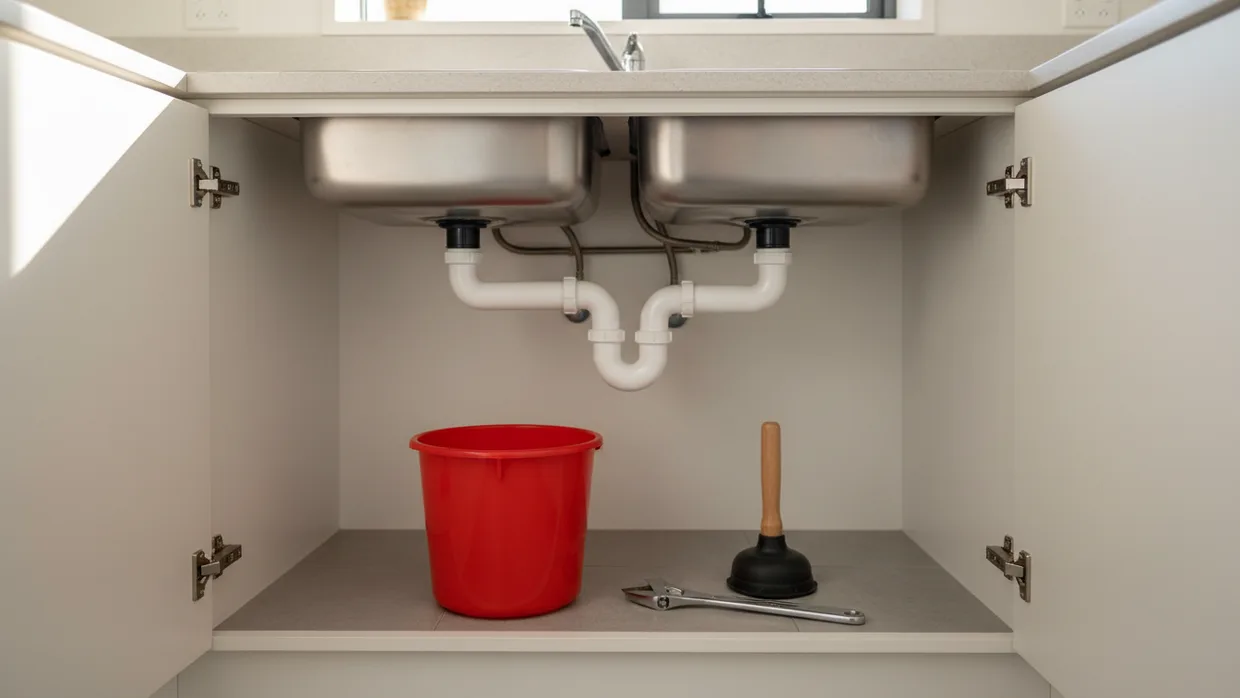
What a trap does
Every toilet, sink, basin, shower and floor drain connects to the sewer, and the sewer is full of gas that smells and can make people sick. The trap is a bend in the pipe that stays full of water after each use. That plug of water, called the water seal, is all that stands between the room and the sewer.
When the seal is lost, the smell arrives. It evaporates in fixtures that are not used for weeks, and it can be sucked out by a partly blocked drain or a blocked vent, which is the gurgle you hear.
S-trap, P-trap and the others
- S-trap: the pipe loops down and leaves through the floor. The most common toilet type in Australian houses.
- P-trap: the pipe leaves horizontally through the wall. Common in apartments, upper floors and newer bathrooms.
- Skew trap: the outlet turns to the left or right side. Found in older homes.
- Bottle trap: a compact upright trap under a basin, often chrome, used where the plumbing is on show.
- Floor waste trap: the trap under the grate in a bathroom or laundry floor.
Under sinks and basins
Kitchen sinks, basins and laundry tubs have a plastic trap held together with large nuts that undo by hand. Most slow sinks are blocked right there, and it is also where a dropped ring or earring ends up.
To clean one, put a bucket underneath, unscrew the two nuts, and tip the trap out. Clear the gunk, check the rubber washers are seated, and screw it back hand-tight. Run the tap and feel around the joints for drips.
Changing a toilet from one to the other
A toilet pan connects to the drain through a rubber seal called a pan collar. Swapping a toilet for one with the same trap type and set-out is a routine job. Changing from S-trap to P-trap, or moving the outlet, means altering the drain itself, which costs more and may need the floor or wall opened.
Installing or replacing a toilet is licensed plumbing work in Queensland. A plumber can also tell you whether a pan you like will fit before you buy it.
Trap smells and gurgles
A sewer smell from a drain that is rarely used usually means the trap has dried out: run the tap for ten seconds, or pour a bucket of water into a floor drain. A gurgle after the water drains away means air is being pulled through the trap, which points to a partial blockage or a blocked vent further along.
Typical cost: Clearing a simple blockage in one fixture is typically $100–$200. Supplying and fitting a new toilet suite is typically $400–$1,000. See the price guide.