LICENSED LOCAL PLUMBERS ACROSS 53 IPSWICH SUBURBSRedbank Plains, Ipswich · Queensland
WATER SUPPLY · 3 MINUTE READ

Backflow prevention:
keeping dirty water out of the mains.

THE SHORT ANSWER

Backflow is water flowing the wrong way: from a property back into the drinking water supply, when mains pressure drops or a pump pushes against it. A backflow prevention device is a valve that only lets water flow one way. Homes mostly rely on simple built-in ones. Properties with a higher risk, such as commercial kitchens, irrigation with chemical injection and fire services, need a testable device that is registered with the council and tested every year.

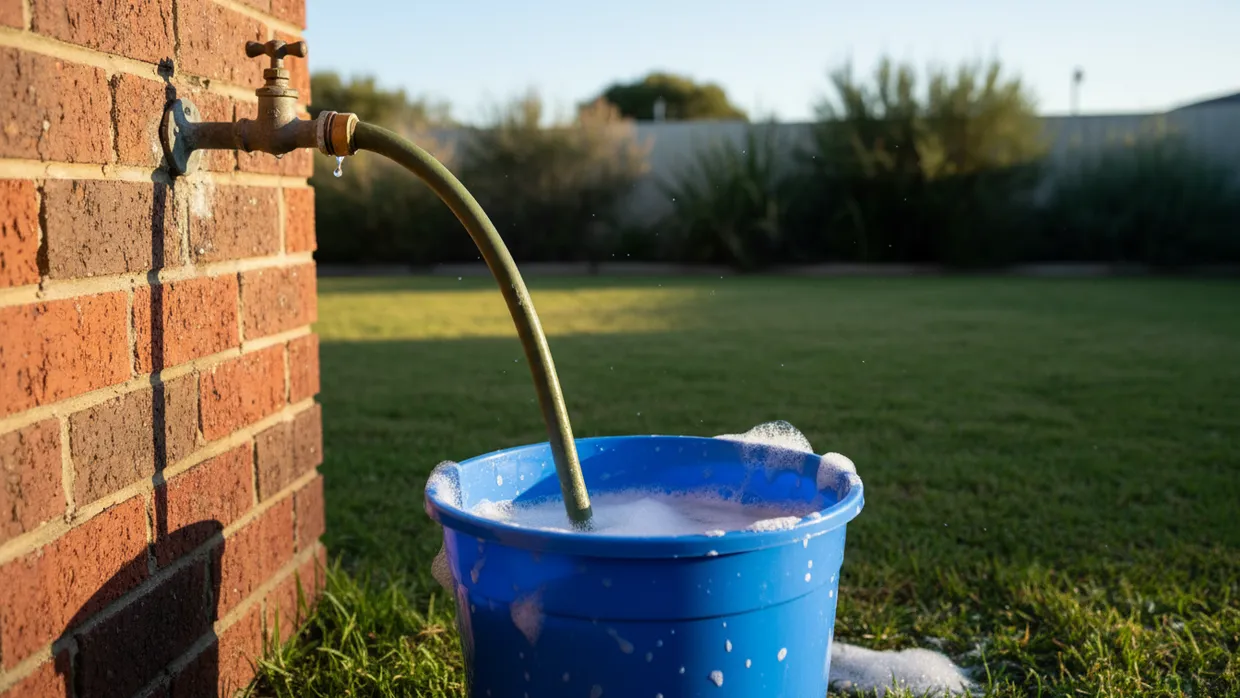
A garden hose connected to an outdoor tap on a brick wall with its other end submerged in a bucket of soapy water
A hose left in a bucket, pool or pond is the everyday backflow risk. If mains pressure drops, that water can be drawn back.
AT HOME

Four simple
habits.

  1. Keep hose ends out of water

    Do not leave a hose submerged in a bucket, pool, pond or drain.

  2. Fit vacuum breakers

    A hose tap vacuum breaker screws onto the tap for a few dollars and stops water being sucked back.

  3. Take care with chemicals

    Weed-and-feed hose attachments and pool top-ups are where contamination comes from.

  4. Leave the meter valve alone

    Many meters have a small one-way valve built in. It is part of the protection.

QUESTIONS

Quick answers.

What is a backflow prevention device?

A valve that lets water flow only one way, into the property, so contaminated water cannot be drawn or pushed back into the drinking water supply.

Do I need a backflow prevention device at home?

Most houses rely on simple built-in protection: a one-way valve at the meter and vacuum breakers on hose taps. A testable device is needed where the risk is higher, such as chemical-injection irrigation or a bore connected to the house pipes.

How often does a backflow device need testing in Queensland?

Testable devices are tested when installed and then every 12 months, by a licensed plumber endorsed for backflow testing, with the result lodged with the council.

Who can test a backflow prevention device?

A licensed plumber who holds the backflow prevention endorsement. Ask for it when you book.

How much does backflow testing cost in Ipswich?

It varies with the device and how many there are. As a guide, a plumber’s call-out and first hour is typically $170–$300; ask for a fixed price per device.

MORE GUIDES

Keep reading.

All guides
NO GUESSWORK

Device due
for its test?

Send the type of property, how many devices and your suburb. A licensed local plumber who covers the area gets back to you.

Get a local plumber
CallTextGet a local plumber