How a grease trap works
Water from the sinks, dishwasher and floor wastes runs into a tank with baffles inside. The flow slows down, the water cools, and fats, oils and grease float up and set as a layer on top. Food solids sink to the bottom. Water from the middle of the tank flows on to the sewer.
When the fat and sludge layers grow too deep, grease starts to pass straight through. That is why a trap needs pumping out on a schedule, not only when it smells.
Who needs one in Ipswich
Businesses that send wastewater from food preparation to the sewer, such as cafes, restaurants, takeaways, bakeries, butchers and commercial kitchens, generally need trade waste approval from Urban Utilities, the water and sewerage provider for Ipswich. The approval sets the type and size of the pre-treatment, usually a grease arrestor, and how often it must be cleaned.
Installing or altering a grease arrestor is plumbing work that needs approval, so it is done by a licensed plumber and drainer. Check with Urban Utilities before fitting out or taking over food premises.
Pump-outs and cleaning
A licensed liquid waste contractor pumps out the full contents, cleans the walls and baffles, and takes the waste to a treatment facility. The frequency is set in the approval and depends on the size of the trap and how busy the kitchen is: often monthly to quarterly.
Skimming the top layer off is not a pump-out. Enzyme and bacteria dosing products do not replace pump-outs either, and some just move the grease further down the pipe where it sets again.
When grease gets into the drain
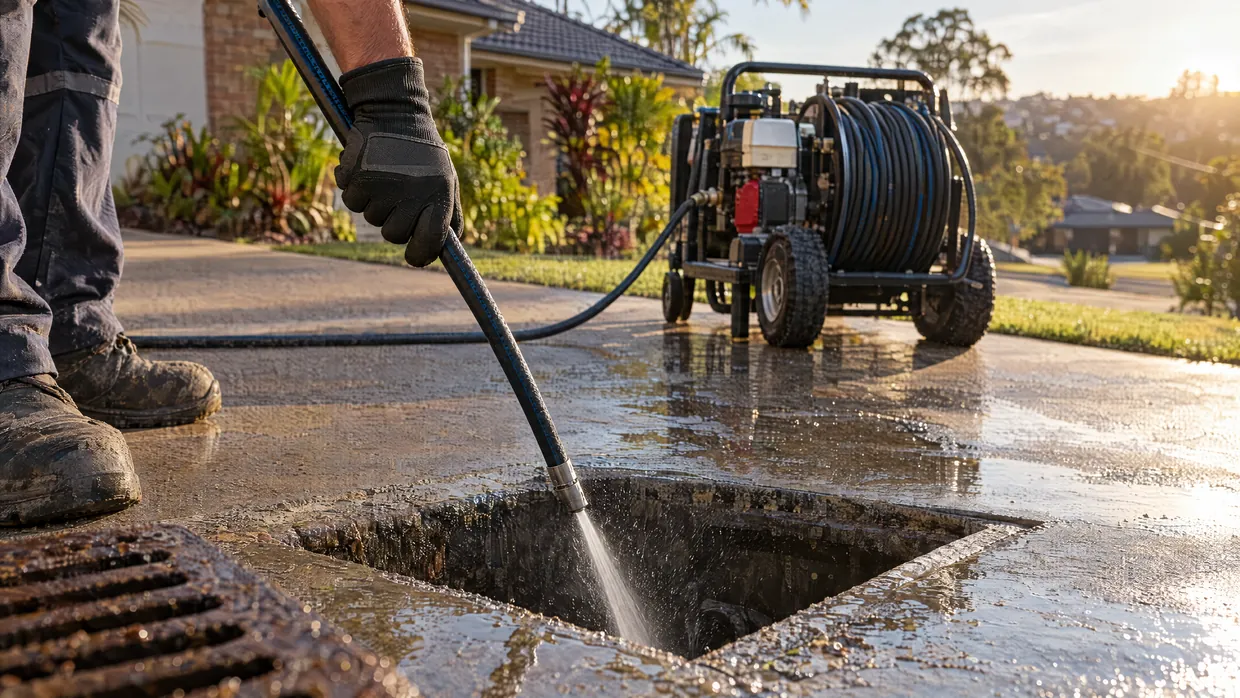
Grease that gets past a full trap, or straight down a household sink, cools and sets on the pipe wall. Food scraps and wipes catch on it until the drain blocks. Hot water and detergent only move it a few metres along. A plumber clears it with a high-pressure jetter, which cuts the build-up off the pipe wall.
Grease at home
- Wipe greasy pans with a paper towel before washing them.
- Pour cooled fat into a jar or tin and put it in the bin.
- Use a sink strainer, and empty it into the bin.
- Do not pour fat down the sink with hot water: it sets further down the pipe.
- A kitchen sink that keeps slowing down usually has grease in the drain under the house.
Typical cost: Jet rodding a drain blocked with grease is typically $250–$500. Clearing a simple kitchen blockage is typically $100–$200. See the price guide.