How it works
Every drain in the house joins one sewer pipe that runs to the street. When that pipe blocks, whatever goes down has to come out at the lowest opening. Without a gully, the lowest opening is usually the shower or a floor waste inside the house.
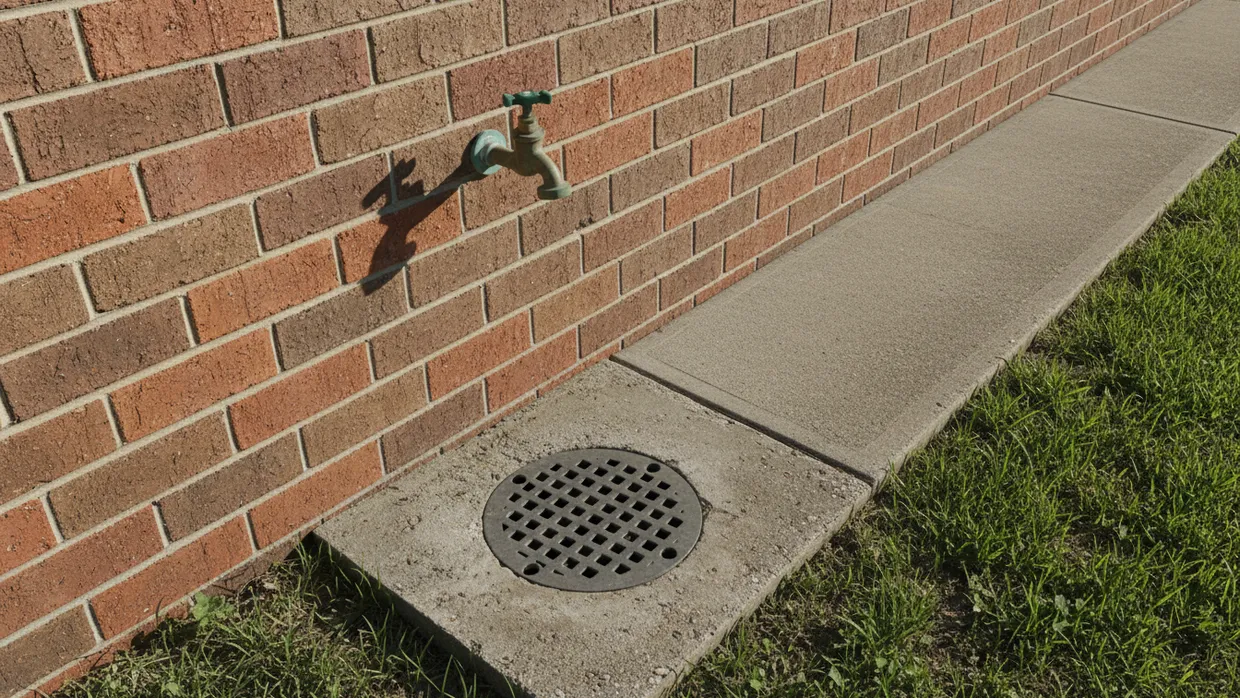
The gully is built to be lower than all of them. Its grate is loose on purpose: a backed-up sewer lifts it and overflows into the yard. That is unpleasant, but it is far cheaper than sewage through the bathroom.
The height rules
Under the plumbing standard (AS/NZS 3500), the top of the gully sits at least 150 mm below the lowest fixture inside, usually the shower or floor waste, and at least 75 mm above the ground around it, unless it is set in paving that falls away from it.
Both matter. Too high, and sewage reaches the shower first. Too low, or with soil built up around it, and stormwater pours into the sewer every time it rains, which is one way sewers overload in Ipswich storms.
What goes wrong
- Covered over: garden beds, mulch, pavers, concrete paths, decks and sheds built on top.
- A grate that is cemented in, screwed down or swapped for a sealed cap.
- Ground or paving raised around it after landscaping, so it now sits in a dip.
- A roof downpipe piped into it. Stormwater must not go to the sewer.
- A sewer smell near it. The trap under the grate has dried out: pour in a bucket of water.
If it is overflowing
It is doing its job: the sewer is blocked somewhere past it. Stop using water in the house, because every flush and shower comes out at the gully. Keep children and pets away; it is raw sewage.
If sewage is also coming from a manhole in the street, or the neighbours have the same problem, the blockage is in the sewer main: call Urban Utilities on 13 23 64. Otherwise the blockage is in your own drain and needs a plumber with a drain machine or jetter.
Typical cost: Clearing the blocked drain behind an overflowing gully is typically $180–$550 in Ipswich. See the price guide.