The types, and what they do
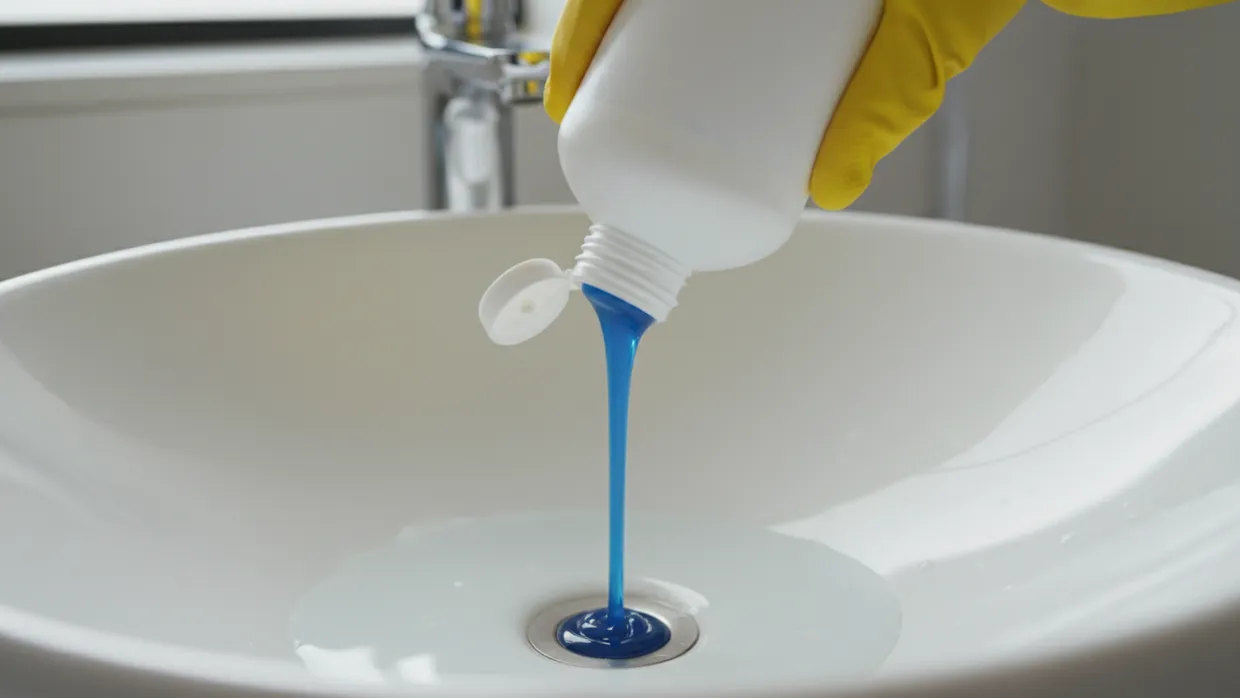
- Caustic cleaners (crystals or gel, sodium hydroxide): the common supermarket kind. They turn grease and hair to a soapy sludge and give off heat as they work.
- Acid cleaners (sulfuric acid): stronger and far more dangerous. Not for home use.
- Enzyme or bacterial cleaners: slow, gentle and safe for septic systems. They help keep a drain clear; they will not open a blocked one.
- Bicarb soda and vinegar: fizzes and freshens. It will not clear a real blockage.
The risks
- Burns to skin and eyes, especially if it splashes back when you plunge afterwards. Never plunge or snake a drain with cleaner in it.
- Toxic gas if it meets bleach or another cleaner. Never mix products.
- Heat that can soften PVC pipes, damage old pipes and seals, and crack a toilet pan. Most are not for toilets at all.
- On septic or a treatment plant, caustic cleaners kill the bacteria the system runs on.
- A sink full of caustic water for the plumber. Always say what you poured in, and when.
When to stop and call
If one dose has not cleared it, a second will not either: the blockage is too solid or too far down. Stop there. The same goes if more than one fixture is slow, the toilet gurgles when the shower drains, or the gully outside is full. Those point to the main drain, and no bottle reaches that.
Typical cost: Clearing a simple blockage is typically $100–$200 in Ipswich; most blocked drain jobs are $180–$550. See the price guide.