Plunger or drain snake: the right tool, used right.
THE SHORT ANSWER
A cup plunger suits sinks, basins and showers; a flange plunger, with the rubber sleeve underneath, suits toilets. A hand drain snake (a coiled cable you turn by hand) reaches clogs a metre or more down a sink or shower drain. A toilet needs its own toilet auger. If the tools do not clear it, or more than one fixture is blocked, the problem is in the main drain.
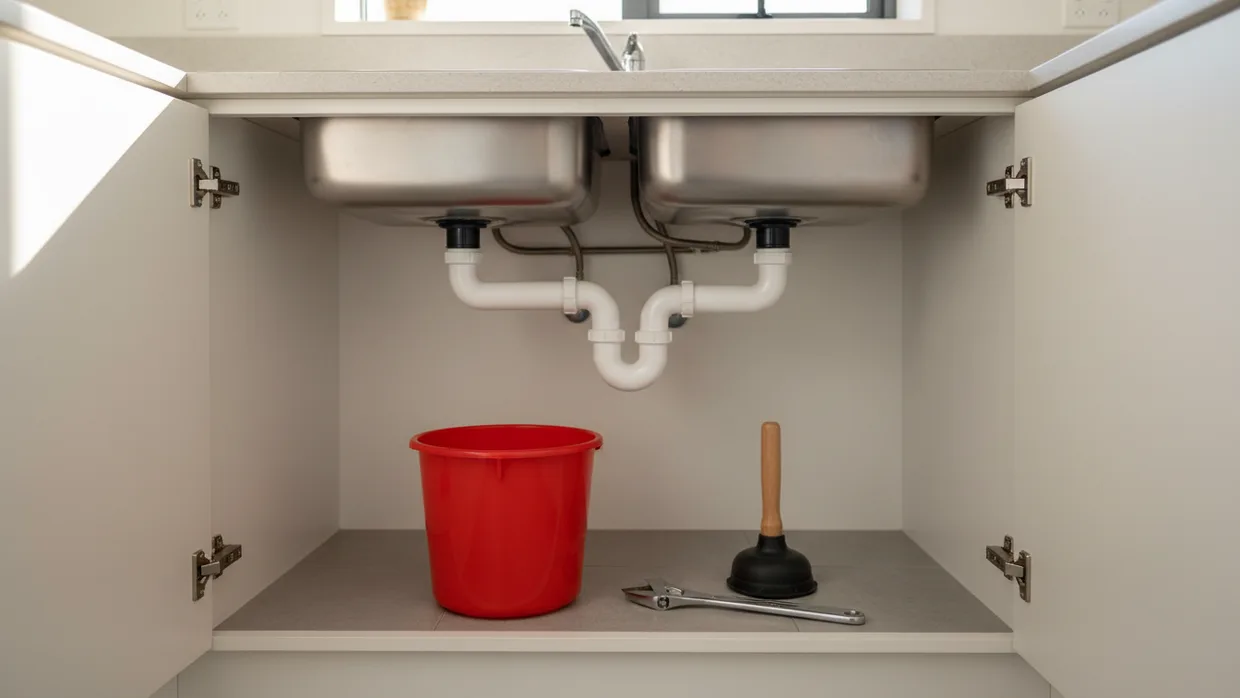
A cup plunger and a bucket for the trap deal with most kitchen sink clogs.
THE PLUNGER
Plunge properly in four steps.
Pick the right one
Flat cup for sinks and showers. Flange (the sleeve folds out) for toilets, so it seals in the outlet.
Seal the other openings
Block the overflow hole with a wet cloth. On a double sink, plug the other bowl.
Cover the cup with water
A plunger pushes water, not air. Run enough water to cover the rubber.
Ten to fifteen firm strokes
Keep the seal, push and pull sharply, then lift away. Repeat two or three times.
Using a hand drain snake
Feed the cable into the drain, or into the pipe in the wall after taking the trap off under a sink. Turn the handle clockwise as you push. When it meets resistance, keep turning to work the tip into the clog, then pull back slowly: hair and gunk come out on the end. Run hot water to finish.
Go gently. Forcing a cable round a bend can kink it, or push a hole through an old pipe.
Toilets need a toilet auger
A sink snake scratches the porcelain and usually coils up in the pan. A toilet auger has a sleeve that protects the bowl and a short cable shaped for the bend. If something solid went down, such as a toy or an air freshener, do not push at it: it has to come back out, and that is a plumber’s job.
When not to
After pouring in chemical drain cleaner: plunging or snaking splashes it back at you.
When several fixtures are slow, or the gully outside is overflowing: the blockage is in the main drain, out of reach.
When the clog keeps coming back: tree roots or a damaged pipe need a plumber’s machine and a camera.
Hired electric eels on the main drain: they can jam, snap or break an old clay pipe.
Typical cost: Clearing a simple blockage is typically $100–$200 in Ipswich. See the price guide.
What is the difference between a sink plunger and a toilet plunger?+
A sink plunger is a flat cup that seals on a flat surface. A toilet plunger has a flange, a rubber sleeve under the cup, that seals in the curved outlet of the pan.
How do I use a drain snake?+
Feed the cable in while turning the handle clockwise. When it meets the clog, keep turning to hook it, then pull back slowly and clean the end. Flush with hot water.
Can a drain snake damage pipes?+
A hand snake used gently rarely does. Forcing it, or using a hired powered machine on old clay or thin PVC pipes, can crack or puncture them.
Why does my drain keep blocking after I clear it?+
The cause is still there: tree roots, built-up grease, or a sagging or broken pipe. A drain camera inspection shows which.
How much does it cost to have a drain cleared in Ipswich?+
A simple blockage is typically $100–$200; unblocking a toilet $95–$180. With a drain camera and jetting, $350–$900.