How we find the cause.
We start with what is in your water and what you want out of it, not with a catalogue. Ipswich network water is moderately hard and chloraminated, which rules some products in and others out. Tank water is a different job again. We tell you which of taste, scale, sediment or disinfection you are actually solving, and which filter stage does that, before anything is quoted.
Filters have to match the water. Ordinary carbon does little to chloramine; catalytic carbon does. A softener protects a hot water system but is wasted on cold taps and adds sodium. Tank water needs sediment filtration and ultraviolet disinfection before anything else is worth discussing. And every filter needs its cartridge changed on schedule, or it becomes the problem rather than the fix. We fit units certified to the Australian standard for domestic water treatment appliances, plumbed with a proper isolation valve and a drain where one is needed, and we tell you the replacement interval in writing.
What to send us
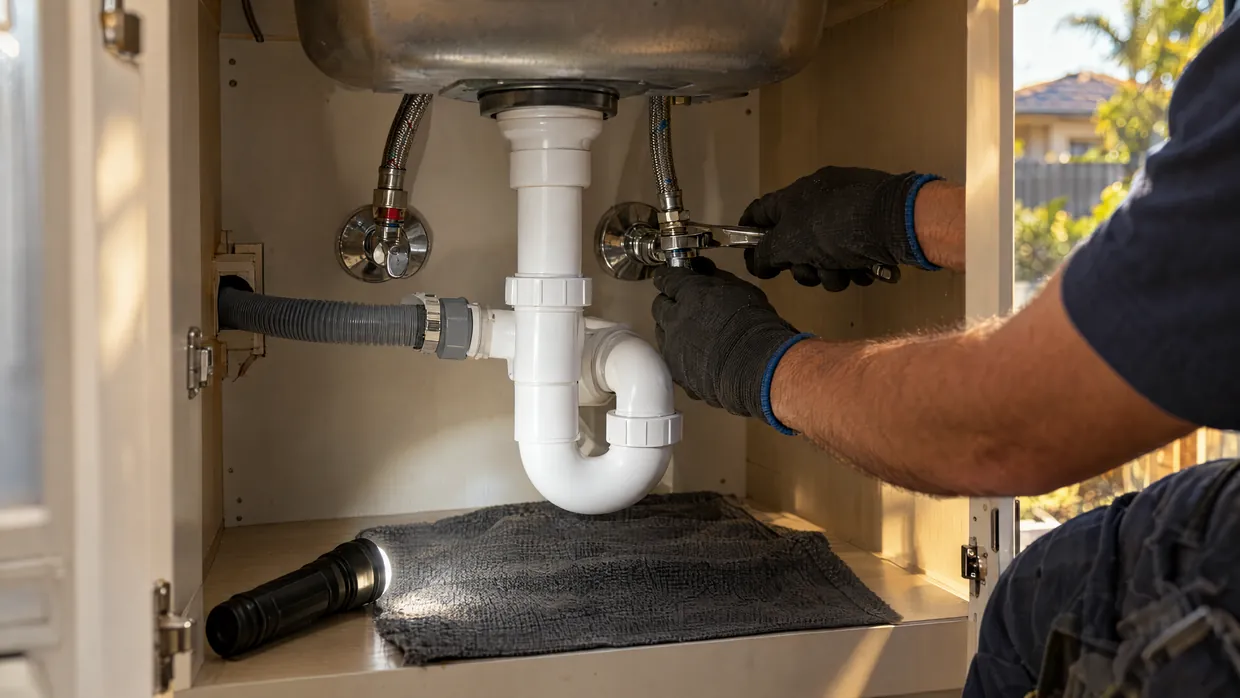
Tell us whether you are on town water or a tank, what you have noticed (taste, scale, staining, cloudiness), roughly how old the house is, and whether the filter is for one tap, the hot water system or the whole house. A photo under the kitchen sink or of the tank pump set-up saves a visit. Your suburb’s water quality page on this site lists what is in the water where you are.
What actually moves the price
The number of stages, point-of-use versus whole-of-house, the flow rate needed, the access under the sink or at the meter, and any electrical work for a UV unit all move the price. Cartridge replacement is an ongoing cost, so ask for that figure up front and compare it between quotes.