What’s different
in Collingwood Park.
Collingwood Park homes from the 1960s to 1990s commonly have copper supply pipes, sometimes cast into a concrete slab. A slab leak shows up as a warm patch on the floor, a jump in the water bill, or damp that never dries. The search starts with isolating sections and reading the meter, long before anyone opens a floor.
In Collingwood Park, ground movement over historic workings stresses buried water services. If your water use has climbed for no clear reason, turn everything off and watch the meter. A dial that keeps moving means a leak.
Mostly single-storey brick homes from the 1980s and 1990s, with pockets of newer housing. Around 35% of Collingwood Park households rent. If you rent, report the fault to your property manager first. They authorise the work, and the plumber deals with them from there.
Part of Collingwood Park is underlain by the decommissioned Westfalen No. 3 and New Redbank collieries, and subsidence events in 1988 and 2008 damaged houses in the suburb. The Queensland Government maintains information about the area and its assistance arrangements. Queensland Government: Collingwood Park mine subsidence ↗
What the data says about Collingwood Park
- The pipes
- Collingwood Park homes mostly run copper supply pipes from the 1960s to 1990s. The original fittings are wearing out. Ground movement above old mine workings adds stress to buried pipes here.
- The supply
- On the Urban Utilities network: treated at Mt Crosby, chloraminated, fluoridated and tested against the Australian Drinking Water Guidelines every month.
- Who looks after it
- 63% of Collingwood Park homes are owner-occupied and 35% rented (2021 Census). In a rental, report a leak to the property manager first.
How the plumber finds the cause
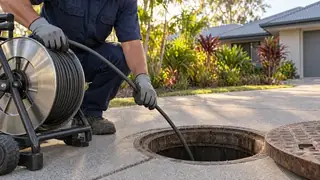
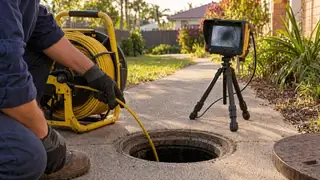
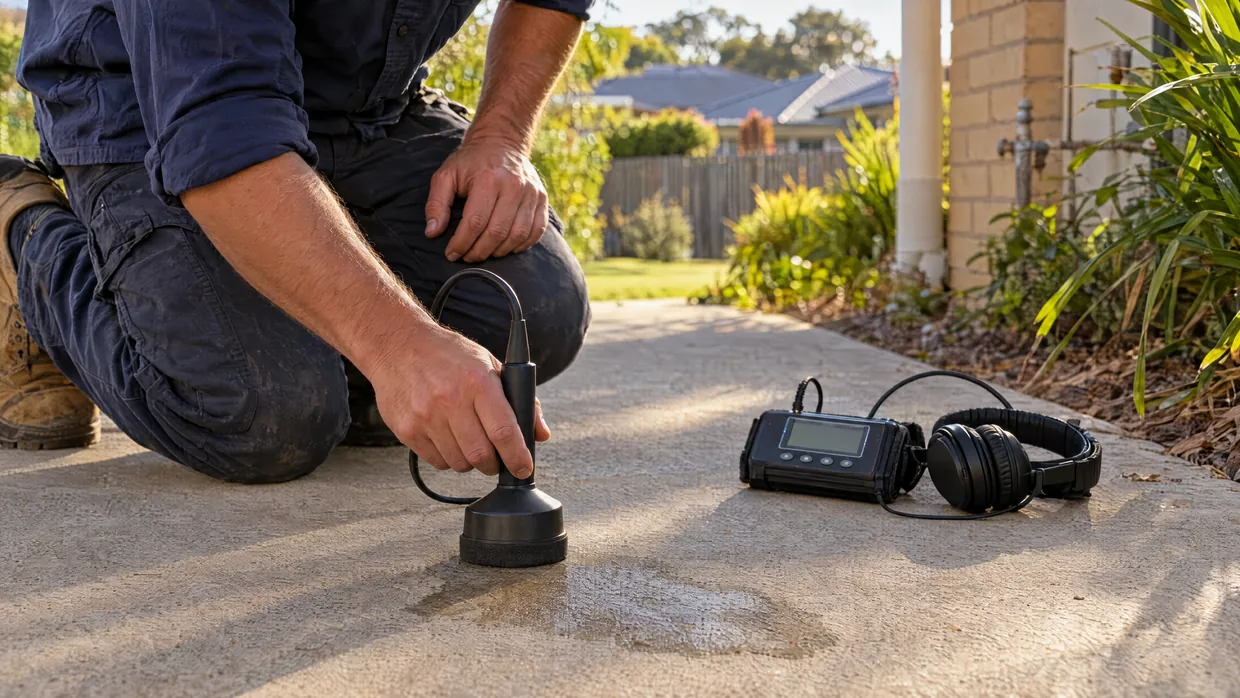
The plumber starts with the symptoms and the pipes they can reach, then narrows it down: isolating sections, checking the meter with everything off, and using locating methods on concealed pipe. A meter that keeps ticking with the whole house shut off is the cheapest test there is. More on leak detection ↗
What to send us
Record where and when the damp appears, and whether it follows rain or a particular fixture. Send water bills, photos and details of recent building work. Keep away from wet areas near electrical fittings. If you can read your meter, note it overnight with no water used.
What moves the price
Location, access, how far the investigation goes and the repair all affect the total. Ask for detection, access and repair as separate items so you can see what each costs.
Typical cost in Collingwood Park
Collingwood Park homes pay what the rest of Ipswich pays: for the investigation, usually $250–$600. Brisbane flat rates around $368 to $398 including GST for the first hour. The repair is separate.
| Job | Typical range |
|---|---|
| Leak detection, first hour | $368–$398incl. GST |
| Hidden leak detection, Brisbane plumbers | $200–$500per job |
| Visual inspection and meter test | $150–$300per visit |
| Acoustic detection | $250–$500per job |
Full leak detection price guide ↗
Indicative ranges, not quotes. Compiled in October 2026 from published Australian cost guides and plumber price lists, with Queensland and Brisbane figures used where they exist. The licensed plumber prices your job after seeing it, and their price can fall outside these ranges. GST is included where the published figure included it.
Sources: ABS 2021 Census QuickStats: Collingwood Park · Queensland Government abandoned mines information. Distances are straight-line from Redbank Plains. Housing descriptions are general observations, not a survey of any individual property.