What’s different
in Basin Pocket.
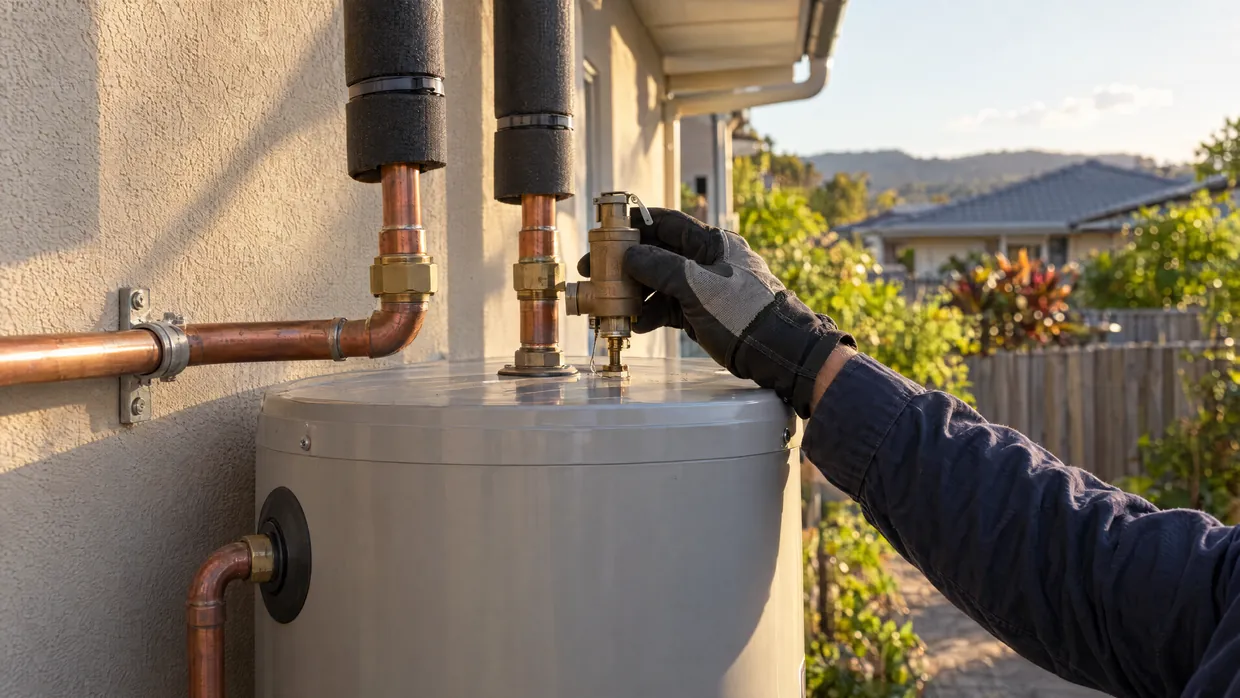
Older Basin Pocket homes often have an outdoor electric storage unit sitting where someone put it decades ago. Replacing it raises questions the original install never faced: tempering valves, the pressure relief drain, and whether the older pipework is up to the job. Have the model label handy if it is safe to read.
If a hot water unit in Basin Pocket has been under floodwater, treat it as unsafe until it has been checked. Electrical and gas components can be compromised even when the tank looks fine.
Post-war and older timber homes, many raised after flooding. The 2021 Census counted an average of 2.3 people per household in Basin Pocket, in homes averaging 2.9 bedrooms. Size a replacement hot water system to the household, whatever size the old tank was.
Ipswich City Council publishes historical flood mapping showing the estimated extent of the 1974, 2011 and 2022 floods. If you are on low ground in Basin Pocket, check it, and mention any flood history in your enquiry. View Council flood mapping ↗
What the data says about Basin Pocket
- Typical household
- The average Basin Pocket household is 2.3 people (2021 Census), which usually calls for a 250 L off-peak electric tank, or 12–16 L/min gas continuous flow.
- The water
- On the Urban Utilities network: treated at Mt Crosby, chloraminated, fluoridated and tested against the Australian Drinking Water Guidelines every month.
- The pipes
- Much of Basin Pocket pre-dates copper and PVC. Galvanised steel water pipes, and the rust they shed, still sit between the meter and the tap in many homes.
How the plumber finds the cause
The plumber identifies the unit type and traces the symptoms to a cause. Electric storage, gas storage, continuous flow, solar and heat pump systems all fail differently. Some faults are a replaceable part. Some are a failed tank. Find out which before anyone quotes a replacement. More on hot water systems ↗
What to send us
If it is safe, photograph the unit and its compliance or model label. Note roughly how old it is, whether every outlet is affected and when it started. Keep clear of escaping hot water, and don’t remove covers or attempt internal repairs.
What moves the price
Diagnosis, parts availability, system type and installation requirements set the price. For a replacement, ask what is included for removing the old unit, connections, valves and any electrical or gas work. Those add up fast when left out.
Typical cost in Basin Pocket
Basin Pocket homes pay what the rest of Ipswich pays: per repair, usually $150–$450. Element, thermostat or valve replacement. An Ipswich-area plumber publishes thermostat swaps from $199 and thermostat plus element from $349.
| Job | Typical range |
|---|---|
| Replace an element or thermostat, electric | $200–$450per repair |
| Replace the relief (TPR) valve | $150–$350per repair |
| Replace the tempering valve | $200–$450per repair |
| Gas valve, thermocouple or igniter | $250–$600per repair |
Full hot water systems price guide ↗
Indicative ranges, not quotes. Compiled in October 2026 from published Australian cost guides and plumber price lists, with Queensland and Brisbane figures used where they exist. The licensed plumber prices your job after seeing it, and their price can fall outside these ranges. GST is included where the published figure included it.
Sources: ABS 2021 Census QuickStats: Basin Pocket · Ipswich City Council flood mapping. Distances are straight-line from Redbank Plains. Housing descriptions are general observations, not a survey of any individual property.